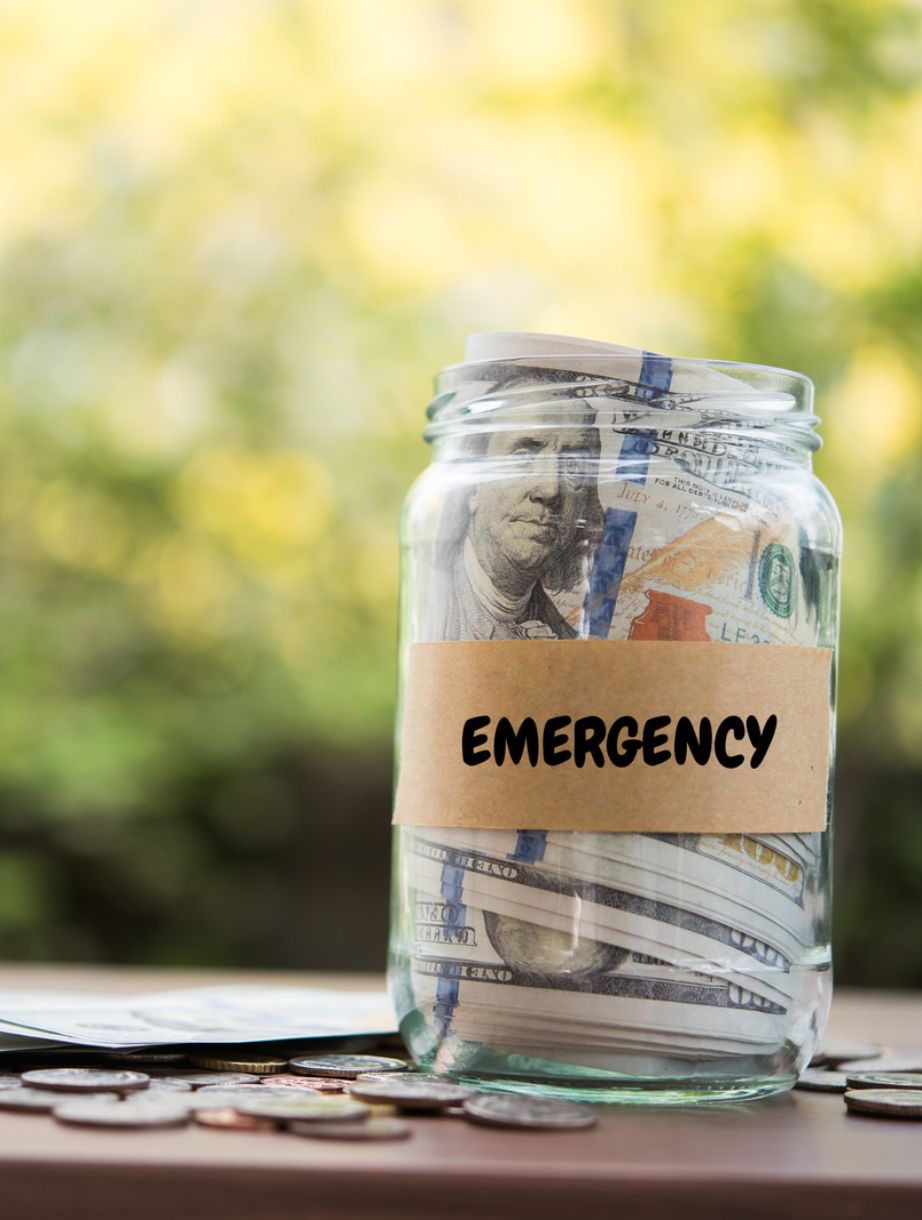
Half of America is one bad month away from a crisis. That's the headline buried inside a Pew Research Center report released this week, and I want every WealthWave leader to read it slowly. Pew surveyed 5,166 American adults this summer. Fifty-three percent said they don't have emergency savings to cover three months of expenses. Twenty-seven percent can't pay all their bills in a typical month. Fifty-four percent couldn't put away a dollar for the future in the past year. Picture who that is. The driver in the car next to you at the light. The teacher at your grandchild's school. The couple two rows over on Sunday morning. Good people, working hard, doing what they were told to do, with nothing between them and a layoff but a credit card.
I've spent 45 years saying people shouldn't have to lose money before someone teaches them how money works. Pew just put a number on how many are losing it right now.
Here are the findings that matter most for our work. Every number comes straight from the report.
32% worry daily about healthcare costs. 32% worry daily about the debt they carry.
Income matters, exactly as you'd expect. Seventy-seven percent of lowerincome adults have no three-month cushion. Now circle this one: 52% of middle-income adults don't have one either. Even among upper-income households, one in five is uncovered.
Here's the finding that should stop you cold. Among Americans who struggled to afford a necessity this year, half borrowed money from friends or family. Nearly a third, 31%, took out a payday loan or another short-term loan. Think about what that means. When the transmission goes or the medical bill arrives, a third of the families already in trouble walk into the most expensive money in America. The Consumer Financial Protection Bureau has long put the annual rate on a typical payday loan near 400%. A family that's already short borrows at a price designed to keep them short.
That's how financial illiteracy gets monetized. Nobody taught that family what a three-month emergency fund protects them from, so the lesson gets taught by a lender. The tuition is brutal, and it compounds.
Nobody taught that family what an emergency fund protects them from, so a lender taught them instead. The tuition is brutal.
There's a quiet temptation in our business, and I've felt it myself. The temptation to spend our time where the assets are. Big accounts, big premiums, big cases. Read that 52% again. Half of middle-income America has no cushion. These are households with two paychecks, a mortgage, a 401(k) they rarely open, and a car note. Wall Street overlooks them because they don't have enough to manage. Government programs overlook them because they earn too much to qualify. They're the largest underserved market in the country, and they're exactly who WealthWave was built for. Pew found something else that should shape how you approach every conversation. Thirty percent of Americans say they often feel stuck when they think about their finances. Thirteen percent often feel ashamed. Shame keeps people quiet, and quiet people don't ask for help. Part of our job is taking the shame out of the room before we ever open a book. These families were never taught. They are capable, and once someone shows them the math, they act.
Millions of Americans have a more immediate question than which investment to choose. Their question is how to make it through the month. Compound interest matters. The Rule of 72 matters. I've built a career teaching both. But a family paying 400% on a payday loan has a different lesson to learn first. This is why the Seven Money Milestones are in the order they're in. Financial Education first. Adequate Protection second. Emergency Fund third. Debt Reduction fourth. Cash Flow fifth. Wealth Building comes sixth, and it stays sixth for a reason. Lay Pew's numbers beside the Milestones and the match is almost line for line. Twenty-seven percent of Americans can't pay their bills in full, which is Milestone 5. More than four in ten are being forced backward by a single medical bill or car repair. The country just measured, household by household, how far it is from the roadmap we teach every day.
Now look hard at the milestone Pew measured most directly. Here's how we teach it:
The unpredictability of life, ranging from minor surprises to major financial upheavals, necessitates the creation of an emergency fund. This fund acts as a financial buffer, enabling you to weather unforeseen expenses without derailing your long-term financial plans. Ideally, this fund should be readily accessible and sufficiently stocked to cover several months' worth of living expenses, providing peace of mind and financial stability during turbulent times.
Read that beside Pew's number. Fifty-three percent of Americans have no fund that would cover three months. More than half the country is standing on the near side of Milestone 3, and most of them have never been told a roadmap exists. The emergency fund is the least glamorous milestone we teach, and it's the one that decides whether a dead transmission is an inconvenience or a catastrophe. The family with a cushion writes a check and goes on with their week. The family without one borrows from a brother-in-law or signs for a payday loan at 400%. Same car. Same repair bill. Two completely different futures, decided long before the engine light came on. A family that reaches Milestone 3 never meets the payday lender. That's why it sits third on the roadmap, ahead of every conversation about growth.
Let me be honest about the limits. These are self-reported household conditions, and some of them are income problems. Financial education can't raise a wage or lower a rent on its own. But in four decades I have never met a family that ended up worse off because someone taught them how money works. For the household paying 400% because no one explained the alternatives, the fix starts at the kitchen table. Before millions of Americans can focus on building wealth, they need to understand how to reach stability. Financial literacy teaches both. That's why I've asked our team to build a Financial Stability Assessment into the front of Money Milestones. Before anyone sees a word about wealth building, we'll know whether they can cover essential expenses, whether they have an emergency fund, how they're managing debt, and whether they've started saving. Then we teach what they need next, in the order they need it.
What I'm Asking You to Do This Week
1. Ask the question first. Before you talk about growth with any family, ask: "If your income stopped tomorrow, how many months could you make it?" Pew says half will answer less than three. Their answer tells you where to start teaching.
2. Show the cost of the emergency they haven't funded. Take a $1,500 car repair and walk it through three ways: paid from savings, paid on a credit card, paid with a payday loan. When they're someone else's numbers, it's information. When they're your numbers, it's a revelation.
3. Put a book in their hands. HowMoneyWorks: Stop Being a Sucker was written for exactly this family. The chapters on emergency funds and debt will do more in one evening than a month of worry.
4. Stop qualifying people by their assets. Qualify them by their need to understand. Teach first. Serve when asked. The family with no cushion today is the client with a plan next year, and the leader on your team the year after that.
Pew calls what it measured "economic instability." I call it our assignment. Fifty-three percent is a number a research center can report and move on from. We can't. Every point of it is a family we know how to help, and most of them have never once had someone sit down and explain how money works. Half of America is one bad month away from crisis. Our job is to get there first.

Tom Mathews, CFEd®
Source: Pew Research Center, "Many Americans Are Struggling to Afford Basic Necessities," October 14, 2026. Surveys of 5,166 U.S. adults conducted July 20–August 9 and August 24–30, 2026, American Trends Panel. Payday loan rate: Consumer Financial Protection Bureau. This article is educational and does not provide personalized financial, tax, or legal advice.