.png)


Leadership gets overcomplicated. People make it sound heavier than it is, harder than it is, and more mysterious than it is.
But real leadership is not about control. It’s not about pressure. And it’s not about having all the answers.
Real leadership is about creating the conditions where people want to give their best.
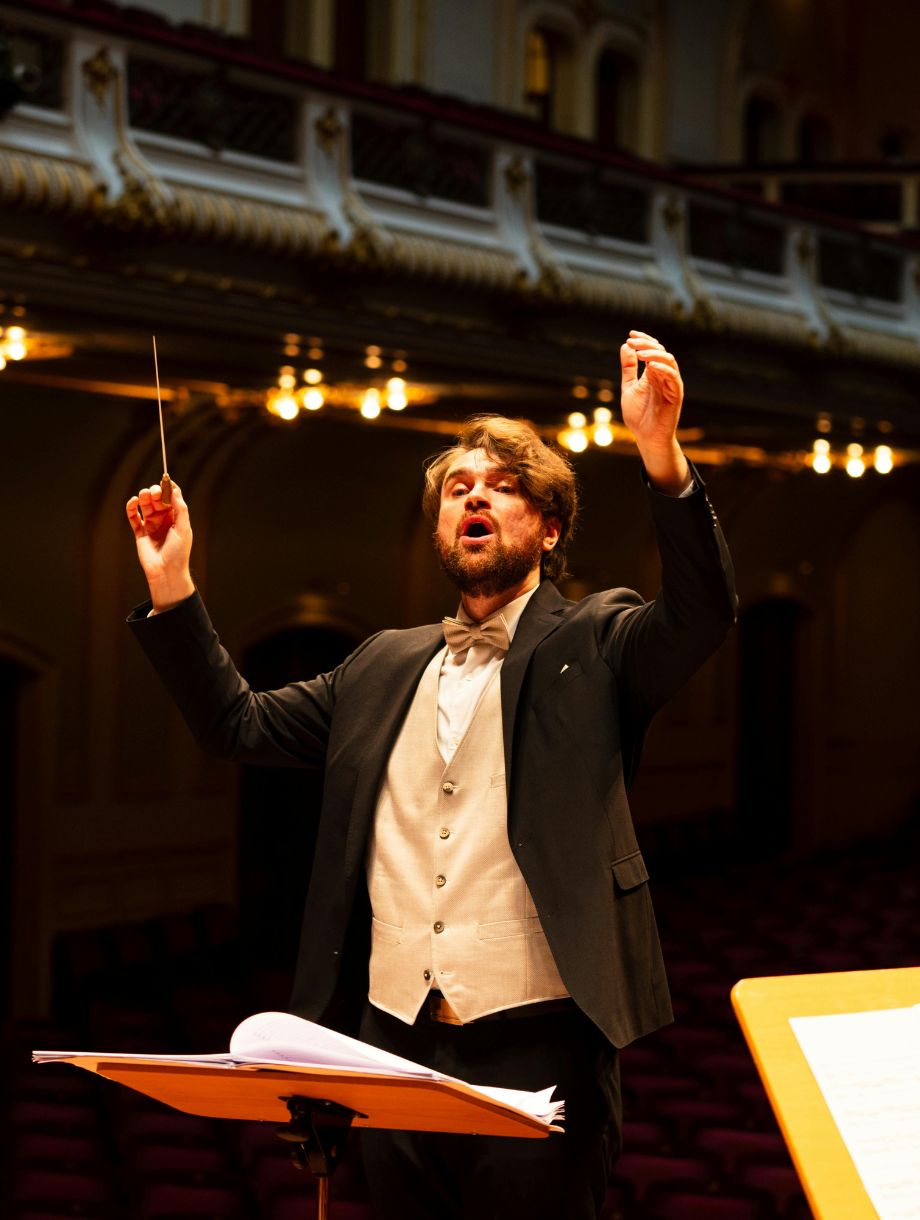
In the same way a conductor enables gifted musicians to make beautiful, majestic music, leadership is what enables a team, a business, or a movement to achieve greatness. The conductor does not play every instrument. The conductor creates alignment, clarity, timing, and belief. That’s what great leaders do.
At WealthWave, that matters more than ever. We’re not just building businesses. We’re building people. We’re advancing financial literacy. We’re helping families understand money so they can avoid exploitation and make better decisions for their future. That mission is too important for leadership to be confusing.
The good news is this: leadership doesn’t have to be hard.
In fact, the best leadership is often the simplest. It comes down to a few essential elements that, when consistently applied, create Accelerated Continuous Improvement. That means not just occasional wins, not just isolated projects, but ongoing progress that becomes part of the culture.
That is the goal, not temporary momentum, but lasting excellence.
One of the biggest reasons organizations lose energy is because they try to do too much at once.
People don’t get inspired by clutter. They get inspired by clarity.
Great leaders identify the vital few issues that matter most and bring the organization into focus around them. When everyone knows what matters most, distractions lose power. Activity becomes aligned. Effort becomes purposeful.
At WealthWave, that means every leader must be able to answer a simple question: what are we truly trying to accomplish right now?
If the answer is vague, the team will drift. If the answer is clear, the team can move.
A unifying theme gives people something bigger than a checklist. It gives meaning to the work. It reminds every team member that what they do matters, and that their effort connects to a larger purpose. People will always work harder for meaning than they will for management.
There’s a big difference between “have to” and “want to.”
“Have to” produces compliance.
“Want to” produces commitment.
Compliance may get you activity for a while. Commitment gets you discretionary effort—the extra thought, energy, creativity, and persistence people only give when they believe in what they’re doing.
That’s where real growth lives.
A “want to” culture is created when people feel three things: they know the mission, they understand their role in it, and they believe their contribution matters.
This is why leadership is not mainly about pushing. It’s about connecting.
When people are reminded that they are helping families become financially independent, helping parents teach their kids about money, helping people avoid the traps that come from ignorance, their work stops feeling like pressure and starts feeling like purpose.
Purpose energizes people in a way pressure never can.
Many organizations get excited about projects. Fewer build a culture of improvement.
Projects are fine. But projects end.
Culture stays.
If leadership is done right, improvement does not depend on one event, one promotion, one campaign, or one strong month. It becomes the way the organization thinks. The team starts looking for better ways to communicate, better ways to serve, better ways to duplicate, and better ways to lead.
That’s enterprise excellence.
For WealthWave leaders, this means improvement cannot live only in strategy sessions or leadership retreats. It has to show up in field training, in coaching, in meeting rhythms, in recruiting conversations, and in the way we recognize progress.
When improvement becomes normal, growth becomes sustainable.
A good plan that people understand will outperform a brilliant plan that nobody can execute.
That’s another place where leaders make things too hard.
The right action plan is not complicated. It is clear. It tells people what matters, what happens next, who owns it, and how progress will be measured. It turns vision into movement.
People don’t need more noise. They need direction.
The best leaders simplify the path forward so their team can act with confidence. They remove confusion. They reduce friction. They help people see the next step and take it.
And just as important, they stay with it.
A launch is exciting. Maintenance is leadership.
Anybody can rally a team for a moment. Great leaders keep the team engaged long enough to create lasting change. They know that consistency is what turns a message into a mindset and a mindset into a culture.
Every organization hits dead ends. Every leader has moments when the path forward is unclear.
That does not mean progress is over. It means leadership is required.
When a team gets stuck, the answer is not always more effort. Sometimes the answer is better perspective. Sometimes it means narrowing the focus. Sometimes it means asking better questions. Sometimes it means inviting ideas from people who are closer to the challenge than the leader is.
Innovation often comes from clarity, not chaos.
When people understand the mission and the problem clearly, they start offering creative ideas that directly apply to the organization. They stop waiting to be told everything. They start thinking like owners.
That is what a healthy culture does. It unlocks the intelligence of the whole team.
Celebration matters.
Not because leaders need to flatter people, but because people repeat what gets recognized.
When a team member grows, when a leader duplicates, when a family is served well, when a breakthrough happens, it should be acknowledged. Celebration creates belief. It reminds people that progress is real. It turns momentum into confidence.
But strong leadership goes one step further.
It doesn’t just celebrate the outcome. It reinforces the behavior that created the outcome.
That’s how culture is built.
When leaders consistently point back to the habits, decisions, discipline, and teamwork that produced success, they teach the organization how to win again. Success stops being random. It becomes repeatable.
People can feel the difference between being managed poorly and being led well.
Poor management creates confusion, fatigue, and unnecessary friction. Strong management creates order, trust, and progress. It gives people confidence that their effort is going somewhere.
That’s why leadership matters so much. It shapes the experience people have inside the organization. It affects morale, retention, creativity, accountability, and results.
In short, leadership changes the slope of the line.
That’s the point.
The purpose of leadership is to accelerate improvement, to help people and organizations get better, faster, and in a way that lasts. Not through pressure, but through clarity. Not through complexity, but through focus. Not by forcing activity, but by building belief.
Leadership is not about making people do more. It is about helping people become more.
When you focus your organization on the vital few, align people around a meaningful mission, engage hearts as well as hands, execute with clarity, celebrate progress, and reinforce the right behaviors, you create the kind of culture every leader wants, a culture where people do not merely comply, they commit.
That’s a “want to” culture.
And when that culture takes hold, improvement is no longer occasional. It becomes continuous. Growth is no longer fragile. It becomes durable. Excellence is no longer an aspiration. It becomes the standard.
Leadership doesn’t have to be hard.
It just has to be clear, consistent, and connected to purpose.
And when it is, great things happen.
Because when people know why they matter, they will give you their best.






.png)
.png)